


Week 03
FROM 26 APRIL TO 02 MAY.
My week 03 include:
_Prepare for PRESENTATION next week (WK.4)
+ Provide project themes - provide subjects.
+ Provide specialist areas (what you are focusing on - explore technicals skills and approaches)
_Doing Blog (Catch up WK.3 and start WK.4) - Carefully checking your spelling and other things.
_ Re-do the school board.
NOTES: Set up a tutorial with Richard (about what I have done and what I am interested in and inspired to)
👉 Tutorial set up on 29th April 2021.
⚠️⚠️⚠️ ALL OF MY MINI-PROJECTS WAS SYNTHETIC AT THE END OF WEEK 4'S BLOG.
Notebook:
👉 My Thoughts:
_I actually write down and noting some of my interests and inspiration onto the notebook before actually having a tutorial with Richard. And, because this is a fast taking note to find as much as I can so I was writing down as much as possible.
_I wish I had recorded when I was working both outside and the computer's screen so that I could re-look at it whenever I wanted and also show it to the lecture too.


👉 Another thought:
_I had searched a lot and reading through a lot of articles in order to get the "right" ideas for the FMP. It was actually like a reading time and exploring time into my interest and inspiration more than digging into one specific problem. So what you actually looking down here was a bunch of readings and exploring as much as possible.
 |  |  |
|---|---|---|
 |  |  |
 |  |  |
 |  |  |
 |  |  |
 |  |
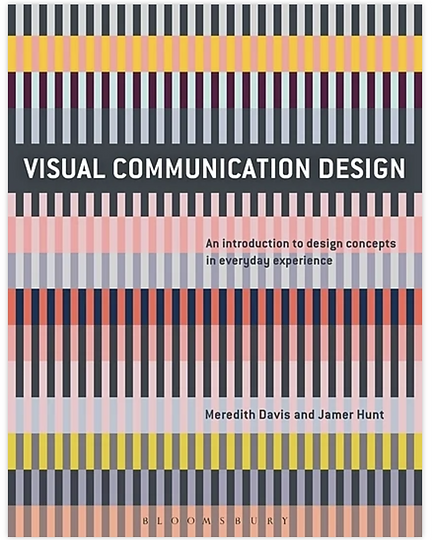
✔️ Reading: "Visual Communication Design"
_Before I got to looking deep into my interests and inspirations, I have looked for this book and find a lot of connections with what I am doing.
_I most focusing on "Interacting, Interpreting and Experiencing" (part 5, p.134) and "Retaining and Extending Meaning" (part 6, p.170)
_I literally like this book through chapters and chapters. And, the "Interacting, Interpreting and Experiencing" has give me a lot of new knowledges. At the moment when I was really curious about attraction, substitution and metaphor, the book has gave me lots of theories, explanations and also figures, and examples.. All of the chapter was talking about interpretation which is the process of finding the meaning in the things that we see and hear. What make me truly excited was the way designers interpreting visual communication through their design products!
_I seriously love the poster design in p.159: "Eye-Bee-M" by Paul Rand (1986). Which is so creative because he borrow the written and spoken language to visualize the poster meaning!
_"Eye-Bee-M" by Paul Rand (1986) also reminding me the design from "AIGA Eye on Design" which they visualize the word 'I' as an eye in flat design


Tutorial:
👉 TUTORIAL!!!!!!!!!!!!
_So I have a tutorial with Richard right on Wednesday afternoon and talk about what I have been searching, reading, and exploring.
_I did not record anything but I have the huge paper board to be my evidence. The paper board was what Richard recorded what I had told him and all the advice he gave me is on the board.


👉 TUTORIAL PAPER BOARD:
_Down here is a complete tutorial board. The left side is the original and the right side is the scanning of its with some more notes that I add to list out what I need to do in the next 4 days to keep myself busy and keep doing the works! And, I also have to record everything I've done onto my Blog and sketchbook.


List of works:
Research:
👉 Notes:
_Before putting everything onto the blog, I record everything I research into my notebook to lay out what I have been researched, read, and watched for all the works in the upper list. And because I am afraid I could lose track when putting everything onto the blog so I have saved a list of links and websites that I had access to.
_Here are the 24 pages A5 scan of my notebook.


👉 These are all the links that I have access to:


1/ Layered Illustration 👉 Paper Engineering / Paper-cut Techniques:
👁️🗨️ What is Paper Engineering?
_It is a branch of engineering that deals with the usage of physical science (eg Chemistry and Physics) and life science (eg Biology and biochemistry) in conjunction with mathematics as applied to converting raw materials into paper useful products and co-products.
_Another very straightforward meaning from the paper engineer: "Paper engineering is a specialized segment publishing to visual interactive / flags and dimensional structured pull tabs and wheels" (this was the meaning for the pop-up book?)
👁️🗨️ About Pop-up Book:
_Making a pop-up book is an intriguing quality process that can take a year to make and we have to hand in hand the paper mechanics and make the artworks evolve together.
_ The video you see on the right side is about the process of making a pop-up book for an old exhibition in 2010: "Paper-engineering: Fold, Pull, Pop, and Turn."
👁️🗨️ My thoughts:
_ I actually have some thoughts about making a project can be about the pop-up book and actually learn the techniques of how to make it and record the process of doing it. But I still hesitate about this project...

Matthew Paris (1200-1259), was an English Benedictine monk credited with the earliest known use of flaps and volvelles (moveable circles) in the book Chronica Majora (1235-1259). The book consists of two volumes packed with illustrations and maps chronicling major historic events from the creation of the world to 1259.

Paper Dolls (1800s) S & J Fuller Publishers (active 1809 – 1862), a London novelty publisher, created paper doll books that provided a cut-out face that could be placed within multiple costumes that went along with the story.

Waldo “Wally” Hunt (1920 - 2009), American advertising agent and book publisher, coined the term "Paper Engineer" to describe the designers of pop-ups and movable paper mechanisms. He is credited with being the catalyst for the second golden age of pop-ups. In 1965, Hunt started Graphics International, a company focused on the production of pop-ups. He would eventually sell Graphics International to Hallmark and open Intervisual Communications were many contemporary pop-up engineers learned thei
Matthew Paris (1200-1259), was an English Benedictine monk credited with the earliest known use of flaps and volvelles (moveable circles) in the book Chronica Majora (1235-1259). The book consists of two volumes packed with illustrations and maps chronicling major historic events from the creation of the world to 1259.
👁️🗨️ History Paper Engineering:
_I found a very useful link that explains to me a lot about the history of paper engineering and also shows me when is the golden age of PE. The website has helped me a lot: History of Paper Engineering
_Paper Engineering first appears in the book Chronica Majora (1235 - 1259) by Mathew Paris (1200 - 1959).
_The first golden age happened in the mid-1800s. And ends due to WWI (1914-1918).
👉 The first golden age of movable books came about during the mid-1800s and was made possible by the superior printing technology of chromolithography (Also known as Lithography) out of Germany.
_The second golden age happened in 1965
👉Heavily inspired by the work of Vojtech Kubota Waldo Hunt and Ib Penick publish books that spark a resurgence in the pop-up market.
_The website left blank at the end year of the second golden age and that makes me think about some questions:
+ "Does the second golden age has not to end yet?"
+ "What happened with the second golden age?"
+ And that also raises a huge question "Right now, in the year 2021, does the publishing industry having problems with digital publishing and so does paper engineering?"
👁️🗨️ Movable Mechanisms:
_There are a lot of techniques divided into a lot of different Taxonomies.
_ I also found a really interesting video: A to Z: Marvels in Paper Engineering - Alphabet Pop-Up Collection which about the works of contemporary paper engineers.

👁️🗨️ About Paper-cut technique:
_This is the art of paper design. Art has evolved uniquely all over the world to adapt to different cultural styles. One traditional distinction most styles share in common is that the designs are cut from a single sheet of paper as opposed to multiple adjoining sheets as in collage.
_Paper-cut technique actually reminds me of "Decorative art"
👁️🗨️ History of Paper-cut technique:
_Paper cut technique starts in China in the 4th century AD - 105 AD.
_Not until the 8th or 9th century, paper cut technique started to appear in West Asia. Appear in the 13th century in Europe and the 16th century in Turkey. In Switzerland and Germany (16th century) we have "Scherenschnitte" (scissor cut) - Silhouette.




👁️🗨️Paper Cutting Techniques:
-
Folding.
-
Negative space cutting.
-
Positive space cutting.
-
Black and white outlining.
👉 I think there are many more techniques but I only find some of these to example?
🌟 After research Thoughts:
_So layered illustration and paper engineering are connected with each other. And, I think the connections here are the techniques. The layered illustration personally I think it only uses is build up layered and layered but paper engineering can do so much more.
👉 I also realize and actually considering that Layered Illustration can somehow be connected with the "Early Graphic Animation Technique"
2/ Early Graphics / Animation Techniques:
👉 About the Early Graphics: If I search for it on Google, it will lead me to "A Brief History of Graphic Design". And the Animation Techniques lead to the techniques in Art and Illustration (which so not my type...)
👉 And so I search for the total name "Early Graphics & Animation Techniques" and so we have the "History of animation". And these are more likely to connect with Motion graphics; Moving Image and After Effects (now)
👁️🗨️ What is Animation?
_Animation is the process of bringing illustrations or inanimate objects to life through motion pictures. And the techniques was to manipulate photos and drawings to give the illusion of movement and present a narrative to viewers on screen.
👁️🗨️ History of Animation?
_The history of animation extends far beyond the history of film. We have the first animated sequence captured on standard picture film—J. Stuart Blackton’s The Enchanted Drawing (1900) which used a live-action actor, props, and stop-motion techniques to create a two-minute comedic scene. And, the French cartoonist Émile Cohl’s two-minute stick figure animation, Fantasmagorie (1908), becoming one of the first cartoons. (You can see two videos down here)
👁️🗨️ Early Animation / Devices:
-
Grecian Pottery: Early form - like the Comic Strip.
-
Shadow play: (Asia found in 900 CE. Europe in 17th Century. And in 18th century started to become popular in France.)
-
Magic Lantern: 1603 👉 First instance of "Moving Image"
-
Thaumatrope: 19th century optical toy 👉 Persistence of vision.
-
Phenakistoscope or Fantascope: 1833 👉 Featuring spinning, painted cardboard disks reflected in mirrors, which created the illusion of movement.
-
Zoetrope: (After the successful of Phenakistoscope) 👉 A spinning cylindrical version that presented images in sequential phases of motion that multiple viewers could watch at a time.
-
Kineograph: Latin for “moving picture,” the kineograph (known as the flipbook) 1868
-
Praxinscope: In 1877, the praxinoscope succeeded the Zoetrope, replacing the latter’s narrow vertical slits with an inner circle of angled mirrors instead.
 |  |  |
|---|---|---|
 |  |  |
 |  |
👁️🗨️ Videos:
_The video on the left was found out when I was researching for example about "Zoetrope".
_Honda "Paper" advertising (video in the middle) actually reminds me of "Kineograph" and "Moving Image". The video was so inspiring with the sound effects which make everything making sense. Another comment that I remember watching the video was: "Honda still the only carmaker who knows how to advert."
_The one on the right side was just about "Traditional animation." And this one was the one that makes me feel that in the old time making a traditional animation was really hard and if you making any mistake... You will have to do that all over again...
3/ Some Graphic Designers / Filmakers / Artists...
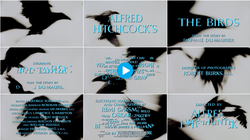
✔️ Alfred Hitchcock's Film credits:
_I think I will have to looking for the designers who have made film credits for Alfred Hitchcock: Hitchcock (Himself); Saul Bass; James S. Pollak; Saul Steinberg; E. McKnight Kauffer.
_You can see all of the film credits here: Title sequences from Alfred Hitchcock films.
_I also look at this page except it does not have much film credit's videos: Title Design in Hitchcock Movies
 |  |  |
|---|---|---|
 |  |  |
 |  |  |
 |
✔️ Oskar Fishinger: (22/6/1900 - 21/1/1967)
_German - America Abstract animator, Filmmaker, and Painter. He is like a Cinematic Abstraction.
👉Techniques:
_Applying oil paint on Acrylic Glass.
_Multiple film projects and several slide projects. ( He wrote his concept of "Raumlichtmusik" which using space - light - music)
_Cel Animation film 👉 Traditional animation. (you can scroll up and see a video about Traditional Animation). I also put a video about Cel animation down here.
✔️ Oskar Schlemmer: (04/09/1868 - 13/04/1943)
_A German painter, sculptor, designer, and choreographer associated with Bauhaus school. (Modernism, Bauhaus Style, Modern Style.)
👉 It is really hard to see his work as the animation that he made quite old!! So there are a lot of parts that I can not understand well.
_Down here is some video about his works. Oskar Schlemmer's works really hard to find!! And, I can not distinguish which one is the one he made.
Oskar Schlemmer-The Triadic Ballet - Extended Version
Triadisches Ballet - Oskar Schlemmer, music by Thomas Gvincinski
✔️ George Melies : (08/12/1861 - 21/01/1938)
_A Frech illusionist, an actor, and a film director.
👉 If you know this picture you will realize who he is!!! The picture is a frame in George Melies's short film: "A trip to the moon" or "Le Voyage Dans La Lune"

👉 Some facts about "A trip to the moon" or "Le Voyage Dans La Lune":
_The film was made in 1902 and it is a silent movie about Science, Fiction.
_The movie was 17 minutes long. It was made 24 frames per sec and the quality of the video was 16 fps.
_The movie was one of the most influential films of cinema history.
_The original film was lost and later rediscovered and a hand-painted version found in 1993 and restored in 2011.
_There is also a colored version of the movie. And it has to be colored frame by frame.
👉 Techniques: (Special Effects)
_He build a Green House (glass-like) So that when he filming there will be enough light.
_He also using Double exposure. Example: The One-Man Band (1900)
_Split screen (Blocking 1 side of the camera lens - filming it and then reusing the same strip)
_Graphic Manipulations.
👉 Basic Camera Tricks:
-
Stop Motion.
-
Slow Motion.
-
Dissolve.
-
Fade out.
-
Superposition.
-
Double Exposure.
-
Substitution.
✔️ In-camera Effects:
_There are 16 In-camera effects:
-
Matte painting. (🌟)
-
Schüfftan process.
-
Forced perspective.
-
Dolly zoom.
-
Lens flares.
-
Lighting effects.
-
Filtration such as using a fog filter to simulate fog or a grad filter to simulate sunset.
-
Shutter effects.
-
Time-lapse, slow motion, fast motion, and speed ramping.
-
Bipacks.
-
Slit-scan.
-
Infrared photography.
-
Reverse motion.
-
Front projection.
-
Rear projection. (🌟)
-
Phonotrope a live animation technique that uses the frame rate of a camera.
👉 You can see I only tick into 2 effects: one is "Matte painting" and two is "Rear project".
Oskar Schlemmer-The One-man Band
(🌟) Matte Painting:
_ A matte painting is a painted representation of a landscape, set, or distant location that allows filmmakers to create the illusion of an environment that is not present at the filming location.
_ Another definition of Matte paintings (or ‘glass shots’): originated during the early period of the silent era. They gave production units the freedom of never having to leave the studio grounds and still creating films that left the audience in awe.
_Here are some examples:
 |  |  |
|---|---|---|
 |  |  |
 |  |
👉 I'm really surprised by the way all the artists have drawn out really realistic scenes! And if I did not research about this... I have not known!! And now whenever I watch old movies, I will just guess if there are any in the scene...
(🌟) Rear Projection:
_ Rear projection (also known as process photography) is part of many in-camera effects cinematic techniques in film production for combining foreground performances with pre-filmed backgrounds.
_ Rear Projection was widely used for many years in driving scenes, or to show other forms of "distant" background motion.
_Here are some examples:


4/ Art Therapy:

👉 What is Art Therapy?
_ Art therapy, a hybrid field largely influenced by the disciplines of art and psychology, uses the creative process, pieces of art created in therapy, and third-party artwork. Art therapy primarily aims to help individuals experiencing emotional and psychological challenges achieve personal well-being and improved levels of function.
👉 The Goal of Art Therapy:
_ The goal is to utilize the creative process to help people in treatment develop self-awareness, explore emotions, address unresolved emotional conflicts, improve social skills, and raise self-esteem. And, in doing so, it will help to find a way to gain personal insight and develop new coping skills.
👉 Art Therapy's techniques: Drawing / Painting / Coloring / Sculpting / Collage / ...
_ All of the above help people who have art therapy sessions to analyze what they have made and how they feel. Through exploring art, people can look for themes and conflicts that may be affecting their thoughts, emotions, and behaviors.
👁️🗨️NOTES:
_We don't need to have artistic ability or even special talent to participate in art therapy.
_Everyone of all ages can benefit from Art therapy! Some research suggests that just the presence of art can play a part in boosting mental health.

✔️ Art Therapy's History:
_The term “art therapy” was coined in 1942 by British artist Adrian Hill, who discovered the healthful benefits of painting and drawing while recovering from tuberculosis.
_In the 1940s, several writers in the mental health field began to describe their work with people in treatment as “art therapy.”
_There were no formal art therapy courses or training programs available at that time, these care providers were often educated in other disciplines and supervised by psychiatrists, psychologists, or other mental health care professionals.
👉 Contributors:
_Margaret Naumburg, Hanna Kwiatkowska, Florence Cane, Edith Kramer, and Elinor Ulman were five influential writers of the 1940s who made significant contributions toward the development of art therapy as a recognized field. (Goodtherapy, 2016)
(🌟) Art Therapy Exercises:
👉 Here we have some Art therapy's exercises:


👉 My thoughts:
_About Art Therapy, I have not ever joined in once in my life... We have art therapy sessions workshop was organized twice (If I'm not wrong)... Oh I have checked and it only organized once.


✔️ Watching: "Life of a Graphic Designer":
_There is a video about the life of a graphic designer, which you can see down here which makes me think about art therapy for graphic designers. And, it actually not hard to realize when I can understand from the graphic designer's perspective.
_I agree with Ashlie Jow who made this video. Being a graphic designer is hard and we are not gods. We also tired, sleepy and sometimes can catching stress really easily. But in the other hands, the role of graphic design is can't unchanged to the world.

✔️ Reading:
_The video reminds me of the book I have read "How to be a graphic designer without losing your soul."
_ This book is combining practical advice with philosophical guidance to help young professionals embark on their careers. The book also addresses the concerns of young designers who want to earn a living by doing expressive and meaningful work, and who want to avoid becoming hired drones working on soulless projects.
_What is good about the book is it helps us to answer lots and lots of questions: "How should designers manage the creative process?"; "What is the first step in the successful interpretation of a brief?" and "How do you generate ideas when everything just seems
blank?"
_And I think this book really helped me who is actually facing with all the problems above. I am now a senior student who is actually struggling with the creative process and the problems after graduating.
(🌟) Art Therapy Centre:
👉 Here we have some Art centers in Vietnam having art therapy sessions.


👉 Here we have some Art centers overseas:


5/ Gender Stereotype:

👉 What is Gender Stereotype?
_ The World Health Organization (WHO) defines gender roles as "socially constructed roles, behaviors, activities, and attributes that a given society considers appropriate for men and women." A gender stereotype is harmful when it limits women’s and men’s capacity to develop their personal abilities, pursue their professional careers, and/or make choices about their lives.
_According to Social Role Theory, genders devise from the discrepant distribution of men and women into the social roles both at home and at work. (From a research article: "The Multiple Dimensions of Gender Stereotypes: A Current Look at Men’s and Women’s Characterizations of Others and Themselves" )
✔️ Quote from the video: "Woman and men belong in the kitchen... And the kitchen has food." :)))))
👉 The Concept about Men and Woman:
_Men is characterized as more magnetic than women and is the one who is taking charge and being in control.
_Woman is characterized as more communal than men and is being attuned to others and building relationships.
👁️🗨️Two of these concepts were introducing by Bakan in 1966 as fundamental motivators of human behavior. (Allen, B.P. Gender stereotypes are not accurate: A replication of Martin (1987) using diagnostic vs. self-report and behavioral criteria. Sex Roles 32, 583–600 (1995). https://doi.org/10.1007/BF01544213)
_Over the last decade, the man was being considered with words tags like "Agency"; "Masculinity"; "Instrumentality" and "Competence". And, the woman was being considered with words tags like "Communication"; "Feminity"; "Expressiveness" and "warmth".


👉 Bad Side of Gender Stereotype:
_Gender Stereotype can lead to negatively or passively affects expectations about performance and bias consequent decisions that impact opportunities and work outcomes for both men and women.
_Stereotypes about gender are especially influential because gender is an aspect of a person that is readily noticed and remembered (Fiske et al., 1991). In other words, gender is a commonly occurring cue for stereotypic thinking (Blair and Banaji, 1996).

👉And so because of the surrounding and socialization experiences, young boys and girls learn about gender stereotypes from their immediate environment and the media. They learn how to behave in Gender-Appropriate ways. (Self-Stereotyping)
_I also notice the gendered toys which also can be one of many reasons that young boys and girls self-stereotyping since they were just kids.
✔️ Video: How movies teach manhood? _ Colin Strokes
_Through the video, I get the video about manhood and how children could understand gender stereotypes through movies.
_I also get known with "The Bechdel Test" by asking 3 simple questions in a movie:
-
Are there at least two women?
-
Do they talk to each other?
-
About something other than a man?
✔️ Video: Stereo - A film about reversed gender stereotypes by Ella Fields, 13 years old.
_The video was amazing and put the girl on the opposite side and in the position to become a 'boy.'
_Somehow I just keep thinking about gender stereotypes, the more I dig into it the more I get into LGTB problems and the Gender Equation? Feminist or other unbalance gender problems.
6/ Individualism vs Collectivism:

👉 Individualism:
_ Individualism meaning: the habit or principle of being independent and self-reliant.
_Individualism is a social theory favoring freedom of action for individuals overcollection or state control.
👉Traits of individualistic:
-
Uniqueness.
-
Autonomy.
-
Independence.
-
Self-sufficiency.
_In individualistic cultures, people are considered "good" if they are: Strong/ Self-reliant/ Assertive/ Independent.
_Example: A individualistic culture might say "I'm analytical, sarcastic, and athletic."
👉 Collectivism:
_ Meaning: the practice or principle of giving a group priority over each individual in it.
_Collectivism is the theory and practice of ownership of land and the means of production by the people of the state.
👉Traits of Collectivism:
-
Individuals define themselves in relation to others.
-
Group loyalty is encouraged.
-
Decisions are based on what is best for the group.
-
Working as a group and supporting others is essential.
-
Greater emphasis is placed on common goals than individual pursuits.
-
The right of families and communities come before those of individuals.
_In collectivist cultures where characteristics like being: Self-sacrificing/ Dependable/ Generous/ Helpful to others.
_Example: A collectivist culture might say: "I am a good husband/wife and a loyal friend."

✔️ Relationship in Individualism and Collectivism:
_Individualism: Devote more effort and energy toward actively maintaining close relationships, often through increased self-disclosure and greater intimacy.
👉 So, the relationships between individualism tend to be fraught and fragile.
_Collectivism: Stable relationships are more expected. Maintaining harmony within the interpersonal relationship is of utmost importance in a collectivist culture.
👉 So, the relationships between collectivism more focus on group goals, what is best for the collective group, and personal relationships.
✔️ Individualism and Collectivism crossover:
-
Public priority.
-
Individual's rights and freedoms.
-
Cooperation.
-
Rule of law.
-
Collective responsibility.
7/ Human-Centered Design / Skeuomorphism / Flat Design:
👁️🗨️ HUMAN-CENTERED DESIGN:
👉 So Richard has asked simple questions about HCD:
-
What is this?
-
Why is it important?
-
Why is it now?
✔️ What is HCD?
_Human-centered design involved with the ISO standard (International organization for Standardization)
_Human-centered design is an approach to problem-solving which is commonly used in design and management frameworks to develop solutions to problems by involving the human perspective in all steps of the problem-solving process.
_It involvement typically takes place in observing the problem within context, brainstorming, conceptualizing, developing, and implementing the solution.
More about HCD:
_HCD is a design approach that puts the users first, resulting in useful and usable products and services. So, that the framework required both divergent and convergent thinking which starts wide then narrows down.
_Categorizations of the phrase of HCD by:
-
Define.
-
Ideate.
-
Prototype and test.
-
Implement. (Take it and refine)
✔️ Why it is important?
_Empathy with the people 👉 Thinks of the solutions that will improve their lives.
_Identify new opportunities for diversity (directly connected to the users so that we can follow their needs as they change.
_Approach gives users a sense of being understood. (help us gaining loyalty)
🌟 Mike Cooley (Irish-born engineering, writer, and trade union leader)
_According to Architect or Bee? (Mike Cooley, South End Press, 1982), he coined the term "human-centered systems" in the context of the transition in his profession from traditional drafting at a drawing board to computer-aided design. And, in the book, we also know that HCD is a symbiotic relationship between humans and machines in which human meaning handles the quantitative subsegments and machine meaning quantitative elements.
_He also said that HCD always put people before machines and marvels with delight at the ability and ingenuity of human being.
✔️ Why it is now?
_All I think about is Covid-19, we are now have to work online and digitally. And, suddenly everyone will be working online most of the time comparing before the pandemic. So that makes the digital world have more users as the expectations start to rise higher than ever.
_Remote working raises social and technical issues higher. The problem with security, privacy, and trust started to get more complex.
👉 Then this is why HCD has to be focusing more than ever to catch up with the users by helping them from small problems to bigger problems.
👉 So all of the knowledge above make me think that human-centered design kind of related to design thinking. SO, what are the differences between the two?
✔️ DESIGN THINKING
✔️ HUMAN-CENTERED DESIGN:


Design thinking is a practical, collaborative and interactive approach.
👉 So we could understanding and solve problems.
HCD is a framework for:
-
Designing products.
-
Services.
-
Systems.
👉 But, HCD and DT actually complement each other.
_Both highlight and emphasize a focus on users to identify problems and patterns.
_Both reply on being interactive constantly reviewing and improving processes and products based on users changing needs and abilities.
👉 I found this handbook about HCD. And, it is designed to illustrate how human-centered design practices at UNICEF have to lead to innovative and impactful outcomes for young people. From redesigning products and services to building much-needed capacity in-country offices, we hope that by showcasing these initiatives you will be inspired to integrate a human-centered approach in developing and scaling new solutions for every child.
👉Authors: Jocelyn Ling Malan & Jonathan Newberry

✔️ Video: Flat Design: Is It the Only Way Forward (Left) / Flat Design vs. Skeuomorphism (Limited Literature Review) (Right)
_Before getting into details about Skeuomorphism and flat design, I found some videos first to get to know briefly about what I am researching.
👁️🗨️ SKEUOMORPHISM:


👁️🗨️ FLAT DESIGN:


✔️ Analysis of Apple UI from the 1990s -2020:
_ I have found a really good resource website: "Guidebook: Graphical User Interface Gallery" by Marcin Wichary (2002-2006) which has helped me a lot in researching Apple's UI.
_Through the website, we could look back at icons, sounds, apps, ads, videos, articles, tutorials, and screenshots of old computer user interfaces.
_Down here are some pictures examples I found on the website!

 |  |  |
|---|---|---|
 |  |  |
 |  |  |
 |  |  |
 |  |